
Could Your Gut Be Affecting More Than Digestion?

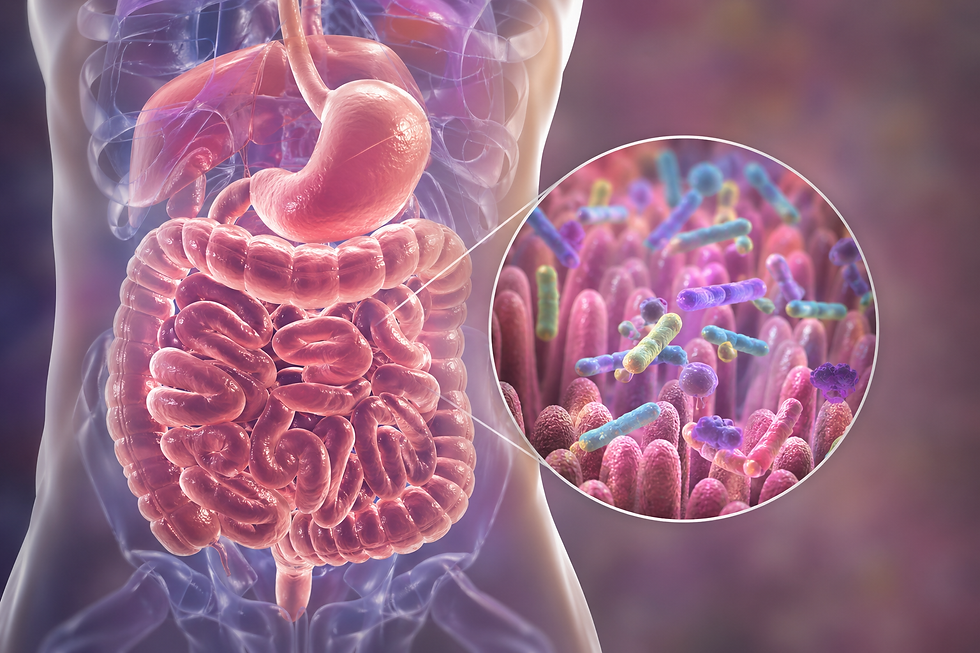
Most people think of digestion as simply breaking down food. But inside your gut, there is an entire ecosystem working behind the scenes.
Your gastrointestinal tract is home to trillions of microbes — bacteria, fungi, and other microorganisms that live in a delicate balance with your body. When this ecosystem is healthy, these microbes help support digestion, regulate the immune system, influence hormone balance, and even play a role in mood and brain function.
When that balance shifts, symptoms can start to appear. Some people notice bloating or digestive discomfort. Others experience fatigue, skin issues, food sensitivities, or brain fog without realizing their gut may be part of the picture.
Understanding what is happening inside the gut can give us insight into overall health.
A Closer Look at the Gut Microbiome
One of the tools we use in functional medicine to better understand the gut microbiome is the GI Spotlight test from Designs for Health.
This test takes a deeper look at several key areas that influence gut health, including:
• Microbiome diversity
• Gut barrier integrity
• Inflammatory markers
• Digestive function
• Immune response
• Fungal balance
How the Test Works
The GI Spotlight test uses a molecular testing method called qPCR (quantitative PCR). Instead of estimating the relative presence of microbes, qPCR measures the actual quantity of specific microbes, giving a clearer and more precise picture of what may be happening inside the gut.
This can help identify patterns that may be contributing to digestive symptoms, inflammation, or microbiome imbalance.
Why This Matters
If you have ongoing digestive symptoms or feel like something in your health just isn’t quite adding up, looking at the gut microbiome can often provide helpful answers.
Your gut does much more than digest food. It influences many systems throughout the body, and understanding it better can be an important step toward restoring balance.


Comments